

Difference Between PGDM and MBA: Which Management Program Fits Your Career Goals Better?
Introduction
Choosing a management course after graduation can feel confusing for many students. Some look for better placement opportunities, while others want practical exposure, leadership skills, or stronger career growth in the corporate world.
During this process, students often compare MBA and PGDM programs because both can lead to careers in marketing, finance, analytics, consulting, and human resources. However, the learning experience, industry exposure, and teaching approach can differ in important ways.
Understanding the difference between PGDM and MBA helps students make a smarter decision based on their interests, career plans, and preferred learning style. Instead of focusing only on the course title, it is important to look at the overall experience and opportunities a program can offer during those two years.
Why Students Often Compare MBA and PGDM
Most students compare these two programs because both can lead to careers in marketing, finance, consulting, analytics, human resources, and business management.
After graduation, many aspirants simply want clarity about which option will help them grow professionally and prepare them better for the corporate world. Some students prefer structured academic learning, while others enjoy practical exposure and interactive learning environments.
This is where understanding the actual difference between PGDM and MBA becomes useful. The decision is not about which course is “better” for everyone. It is more about which learning environment matches your expectations and career plans.
The Learning Experience Feels Different
For many graduates, the biggest difference is not the course name but the way learning happens during the program.
MBA programs generally follow a more traditional academic structure. Students attend lectures, study management concepts, complete assignments, and appear for semester examinations. This helps build a strong foundation in business and management principles.
PGDM programs, however, are often designed around practical learning and business exposure. Along with classroom teaching, students may regularly participate in:
-
presentations,
-
case studies,
-
workshops,
-
live projects,
-
internships,
-
and group discussions.
Many students realize this difference during internships or placement preparation. Some learners feel more confident when they apply concepts through business situations instead of only studying theory.
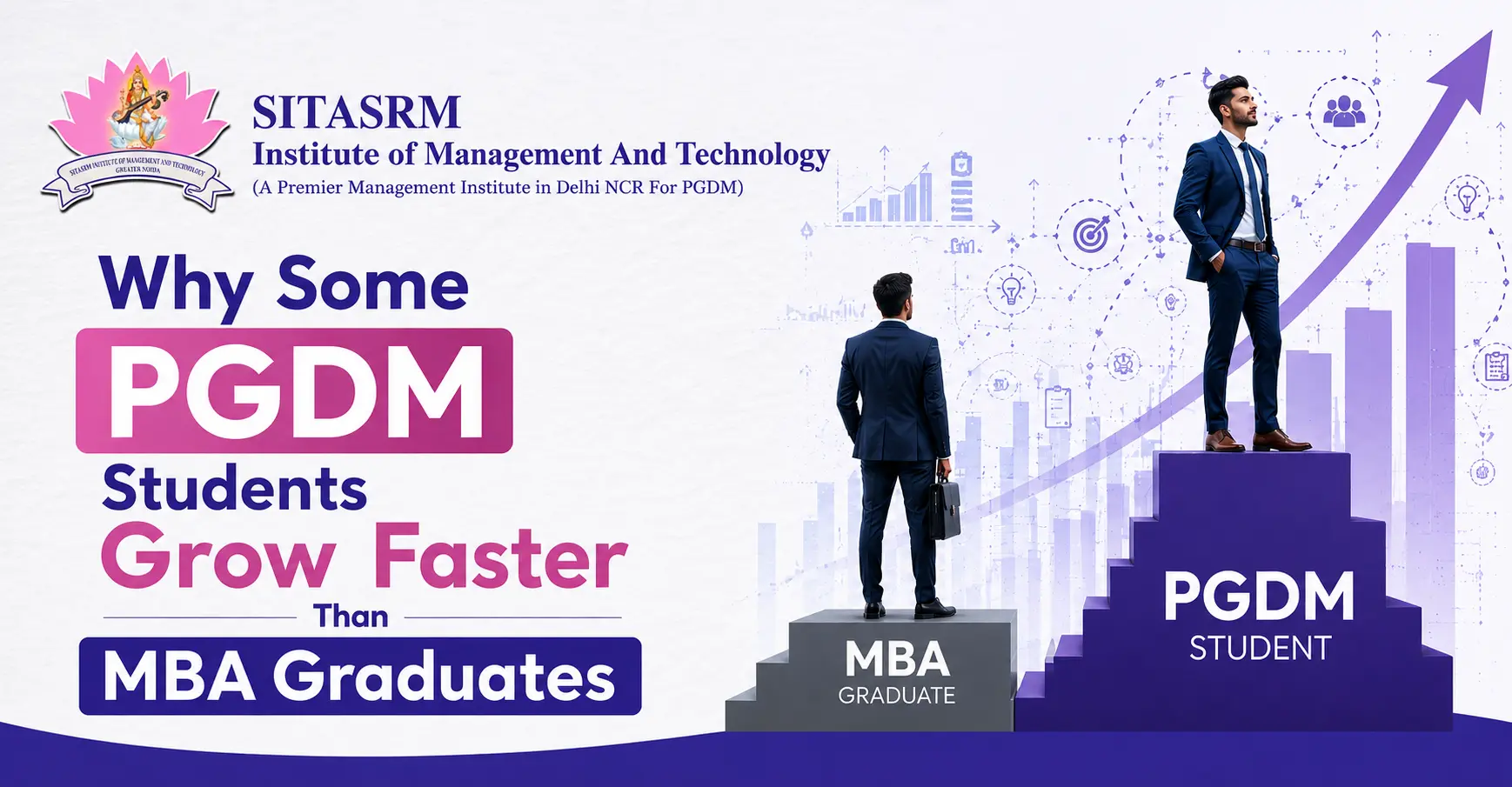
This practical exposure is one reason why the difference between PGDM and MBA matters to students who want stronger corporate readiness before entering the job market.
Exposure Beyond the Classroom
Management education today goes far beyond textbooks. Students now expect colleges to help them improve communication skills, confidence, teamwork, and professional thinking.
This is another area where many aspirants notice the difference between PGDM and MBA.
In several PGDM programs, students get opportunities to interact with industry professionals through guest lectures, corporate sessions, networking events, and business competitions. These experiences often help learners understand workplace expectations much earlier.
Many graduates also feel that participating in presentations, team activities, and industry projects improves their confidence during placements. Learning in such environments can make students more comfortable while handling interviews, group discussions, and professional conversations.
MBA programs also provide valuable exposure, but the overall learning environment may feel more classroom-focused depending on the institute.
Specializations Play an Important Role Today
Career goals have changed significantly over the last few years. Students are no longer interested in learning only one business function. Companies also prefer professionals who can understand multiple areas of business.
This is why specialization flexibility has become an important factor while comparing management programs.
Many institutes now offer opportunities for Dual Specialization in PGDM, allowing students to combine areas like:
-
Finance and Business Analytics,
-
Marketing and Strategy,
-
or HRM and Consulting.
This helps students build wider career options and understand how different business functions work together.
For example, a student interested in marketing may also benefit from learning analytics because businesses today depend heavily on consumer data and digital insights.
Similarly, finance students who understand strategy often gain a broader business perspective, which can help in leadership roles later.
MBA or PGDM: Which Has More Value?
One of the most common questions management aspirants ask is: MBA or PGDM: which has more value?
The answer depends largely on the student’s expectations and career priorities.
Some graduates prefer a structured academic environment with traditional classroom learning. Others look for practical exposure, internships, networking opportunities, and industry-oriented learning.
In reality, recruiters today usually focus more on:
-
communication skills,
-
confidence,
-
problem-solving ability,
-
teamwork,
-
and practical understanding
rather than simply checking the course title.
A student who actively participates in projects, internships, and professional activities during the program often develops stronger workplace readiness regardless of whether the course is MBA or PGDM.
Is PGDM Eligible for Government Jobs?
Many students also search for answers to the question, Is PGDM eligible for government jobs?
Yes, PGDM graduates can apply for many government and public sector opportunities. However, eligibility requirements may vary depending on the organization and specific role.
Still, a large number of management graduates today focus primarily on private sector careers, entrepreneurship, consulting, analytics, marketing, finance, and leadership opportunities.
This is why most students now prioritize skill development, internships, exposure, and long-term employability while selecting a management program.
Choosing the Right Program for Yourself
Choosing between MBA and PGDM should never be based only on trends or opinions from others. Every student has different career goals, strengths, and learning preferences.
If you prefer:
-
structured academic learning,
-
theoretical understanding,
-
and traditional classroom teaching,
An MBA program may suit you better.
On the other hand, if you enjoy:
-
presentations,
-
industry interaction,
-
practical projects,
-
internships,
-
and interactive business learning,
Then a PGDM program may feel more aligned with your expectations.
Students exploring the best PGDM college in Delhi NCR also look closely at internship opportunities, industry exposure, placement support, specialization choices, and campus learning environment before making a decision.
Many aspirants today are also thinking beyond their first job and focusing on long-term career Growth After PGDM 2026, especially in fields connected with analytics, consulting, finance, marketing, and business strategy.
Conclusion
Understanding the difference between PGDM and MBA helps students make more confident and informed career decisions after graduation. Both programs can open doors to rewarding management careers, but the experience students gain during the journey can be different.
Instead of choosing based only on the course title, students should focus on what kind of learning environment, exposure, and professional development they truly want.
In today’s business world, confidence, communication skills, adaptability, and practical understanding often play a bigger role in career success than simply the name of the program itself.
Table Of Content
- Loading...
