
Mastering HR Analytics Skills: What Every PGDM-HR Student Needs to Know
Introduction
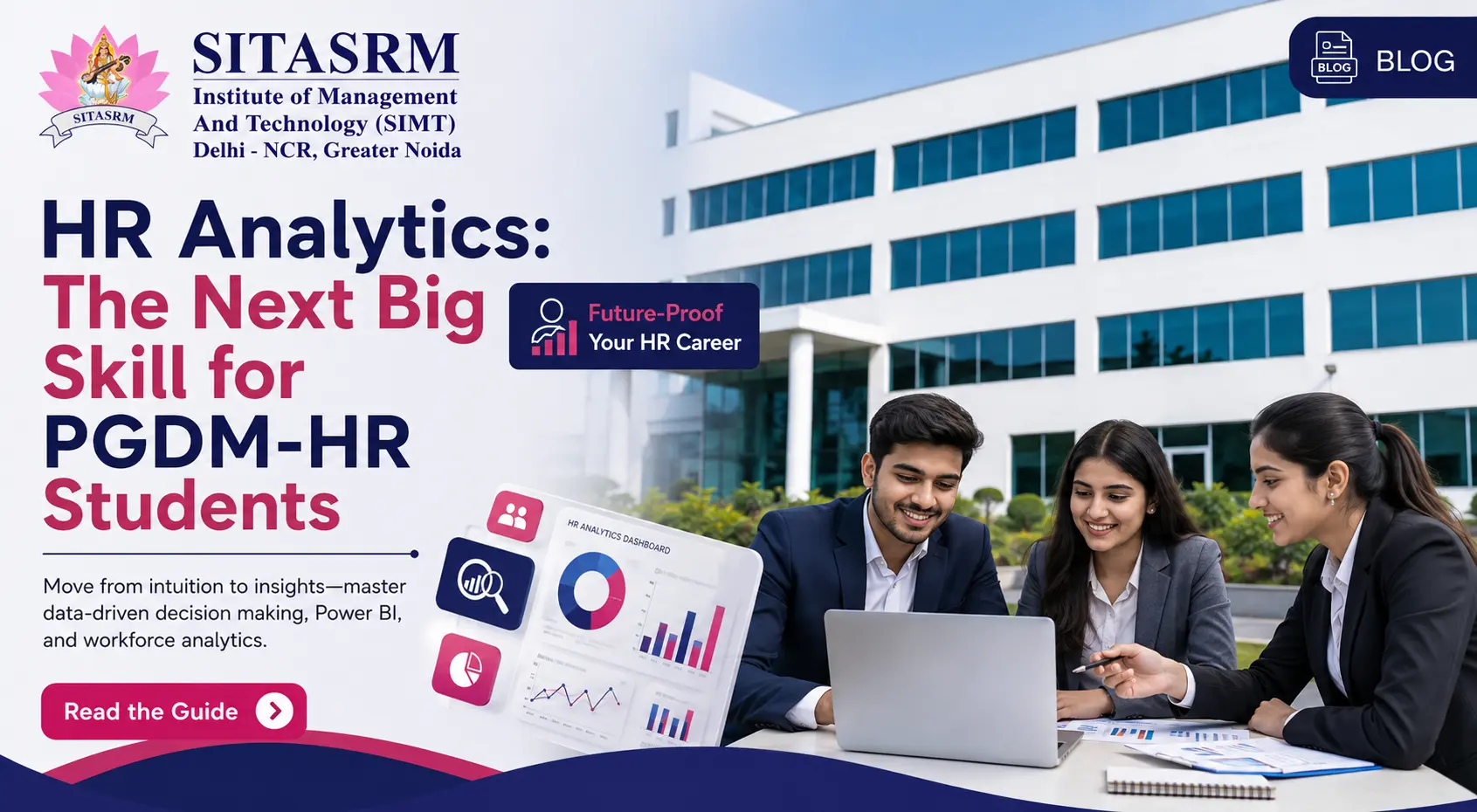
The role of Human Resources (HR) has been evolving faster than ever. HR management is no longer about payroll, recruitment, and employee relations. Now, organisations expect HR teams to know workforce trends, improve employee performance, and make strategic decisions based on data. This change has made HR Analytical skills one of the most valuable.
Artificial Intelligence, Digital Transformation, and automation have changed the way organization manage, hire, and retain talent. HR Analytics skills need a blend of quantitative data skills, business context, and technical software proficiency. Companies are now seeking HR Professionals who can combine people management with analytical skills.
For students pursuing a PGDM in Human Resource Management, learning HR analytics is not just a choice- it is an important career skill.
What are HR Analytics Skills?
HR Analytics is also known as people or workforce analytics. It is the process of collecting, interpreting, and analysing employee-related data to support informed business decisions. HR teams use evidence-based insights, rather than relying on assumptions. It helps to support strategic planning and workplace challenges.
For example, an organisation uses data to answer questions like
• Why are employees leaving the company?
• Which departments have the highest employee engagement?
• What workforce skills will be required in the next upcoming years?
• Which recruitment channels attract the best talent?
• Which training programme improves performance?
The answer to the question enables organisations to make proactive decisions. It supports long-term business growth & improves employee satisfaction.
Important HR Analytical Skills every PGDM-HR Should learn
Every hiring decision, employee performance review, and attendance record surveys valuable information. Students must check the following HR Analytical Skills:
1. Data Analysis and Analytical Thinking – HR professionals need the ability to collect and analyse data to support better decision-making. A strong foundation in data tools is important for HR analytics skills. Students must learn advanced Excel, SQL, Programming Basics. Building dynamic reports and dashboards using Power BI or Tableau is a part of data visualisation.
HRIS proficiency includes extracting and managing data from systems like SAP, workday, or oracle. Analytical Thinking helps HR professionals move from simply reporting data to finding solutions for organisational challenges.
2. Understanding Business & HR Context – HR Analytics is essential as it connects with business objectives. It includes data literacy, such as structuring, cleaning, and verifying the integrity of raw employee data. Its key skills are:
• Understanding HR processes such as compensation, talent development, and recruitment.
• Knowing important HR metrics includes
- Time-to-hire
- Retention-rate
- Cost-per-hire
- Employee-engagement-scores
• Using data to solve workforce-related problems
• Linking HR insights with business outcomes
3. Technical & Software Proficiency – In modern HR analytics, technology plays an important role. Important technical skills include the following:
Data Tools
- Advanced Excel: Pivot table, VLOOKUP/XLOOKUP
- SQL – managing employee data from database
- Python or R basics support advance analytics and automation
Power BI & Tableau tools help the HR team create dashboards. Also, reports for-
-Employee turnover
-Workforce diversity
-Performance trends
-Recruitment performance
4. Communication & Consulting Skills – HR analysts must be able to explain data in the simplest & most convincing way. They should tell the story behind the data and provide recommendations to leadership. Key skills include:
-Data Storytelling- HR Professionals must explain complex data in a simple and meaningful way. Example – Instead of saying, “Employee turnover increased by 10%”
An HR Analysts should explain, “Turnover has increased mainly among employees with less than two years of experience, indicating a need to review career growth opportunities."
-Ethical Judgement – HR professionals handle sensitive employee information. They must ensure:
• Confidentiality
• Data Privacy
• Compliance with organizational policies
• Ethical use of employee information
5. Critical Thinking & Problem-Solving – HR Professionals must know data in context & recommend practical solutions that align with company goals. HR analytics makes professionals check workplace issues before they become big challenges. Further, this leads to improved employee satisfaction & company performance.
Career Opportunities
The demand for professionals with HR analytical skills continues to grow. Some popular career options are:
• People Analytics Specialist
• HR Analyst
• Workforce planning analyst
• Learning & Development analyst
• Talent acquisition analyst
These roles make professionals more valuable to employers. It combines traditional HR Knowledge with analytical expertise.
Future Trends in HR Analytics Skills
Some future trends in HR analytics are the following:
• AI-powered decision-making
• Employee Experience
• Real-time people insight
• Skills-based talent management
• Ethical and responsible data use
The future of HR belongs to professionals who can turn data into smart business decisions. Students must build a future in human resources with analytical skills and practical learning.
Conclusion
HR Analytics skills and jobs are one of the fastest-growing jobs. HR analytical skills are one of the most important competencies for aspiring HR professionals. The future of HR belongs to professionals who can combine human understanding with data-driven decision-making. Mastering these skills doesn’t happen overnight. It requires continuous practice, learning and real-world application.
HR Professionals with analytical expertise become strategic partners who influence organisational growth. A PGDM-HR student develops a strong career in areas such as People Analytics, HR Analytics, and Workforce Planning. It also includes Talent Management & HR Business Partner roles. The future of human resources belongs to professionals who can understand people as well as data.
Table Of Content
- Loading...
